
Fungal Nail Treatment for Healthy Toes
Clear, effective care for thick, discolored toenails so you can feel confident showing your feet again.
What You Need to Know
Understanding toenail fungus and how our team approaches lasting results.
Understanding Toenail Fungus
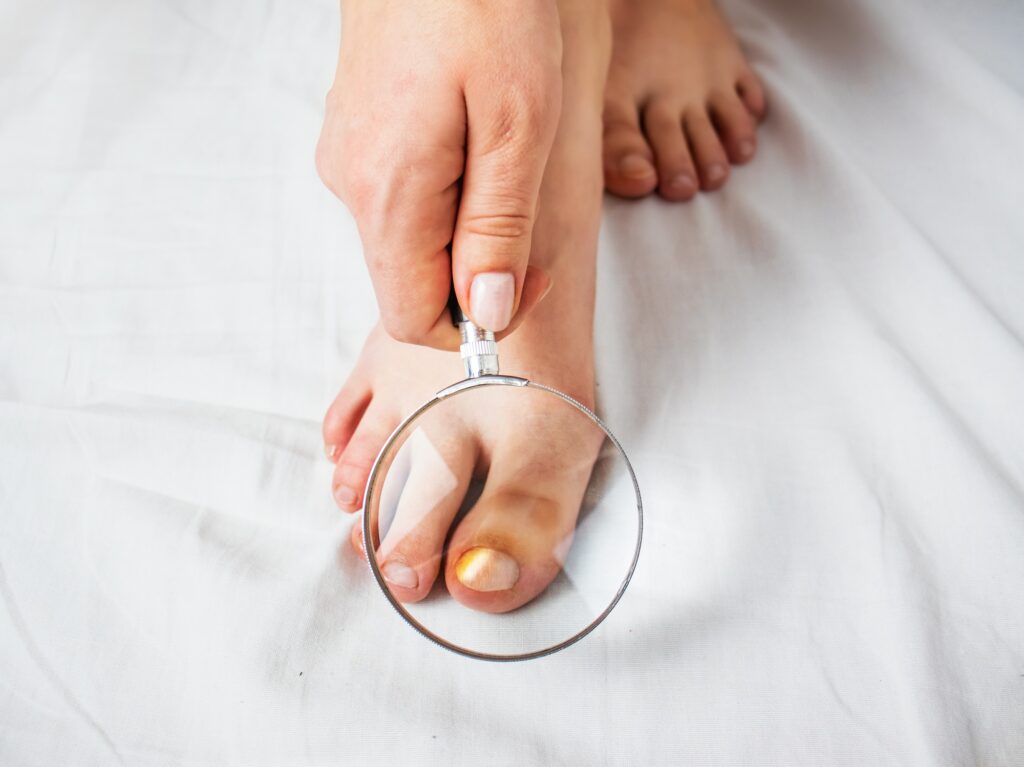
Toenail thickening and discoloration can be caused by many things (psoriasis, injury, lichen planus) but is most commonly caused by Onychomycosis, a fungal infection which can worsen over time. The changes in the nails are due to a local infection of both bacteria and fungus that cause the discoloration, thickness, and debris to collect under the nails.
Onychomycosis is one of the most common fungal infections to affect Americans. In fact, 25 million Americans suffer from this disease. Though it is not particularly painful, it can be embarrassing and cause discomfort. 1 in every 10 Americans deals with thick and ugly toenails.
Are you embarrassed to show your toes in public because your toenails are thick or discolored? Are these thicker nails causing pain in shoes when pressure is applied? Perhaps you have only one ugly toenail now. In time, that may become two, and eventually all ten toes will look as ugly as the first unless you take action.
Fungus is everywhere around us. Predisposing factors such as your general health, shoe type and materials, hyperhidrosis (excessive sweating), and poor hygiene make you more likely to develop this infection. Just as you place bread dough in a warm, dark, moist environment to have the yeast flourish, your feet undergo these same conditions in shoes.
Since many things can make your toenails look funky, an examination by a Weil Foot and Ankle Institute physician is recommended. A thorough evaluation and simple nail culture or biopsy prior to treatment can keep you from wasting time and money on the wrong problem.
Clear the Way for Healthier Nails
Explore specialized fungal nail treatment options designed to address stubborn infections and improve nail health and appearance.
Treatment Options and Ongoing Care
Weil Foot and Ankle Institute provides a number of treatment options for patients experiencing fungal nail conditions. We realize that every patient is unique and that treatments can’t be one size fits all. Once your problem is identified, we will work with you to determine the safest and most effective options. Generally, combination treatment (using two or more therapies simultaneously) provides the best result.
Custom fungal nail soaks are compounded based upon the type and severity of the infection and include dosage information and application instructions. Traditional options such as medicated nail polish, topical creams, sprays, and oral medication are also available, though topical medication is reportedly only 33% effective because it does not penetrate the nail plate.
The Erchonia Lunula laser is a Low-Level Laser Light specifically designed for treating onychomycosis. Lunula is non-thermal, meaning there is no heat used and no sensation during treatment. Treatment involves placing the foot in the laser for 12 minutes, with no downtime and no additional medicine afterward.
KeryFlex Nail Restoration is a painless, in-office application that restores the appearance of natural nails using a composite resin to create a flexible, durable, non-porous nail. Application is completed at a subsequent visit after an initial consultation to confirm candidacy.
Fungal infections can recur, with an estimated 35% recurrence rate. Because of this, we have developed a maintenance program so your toenails can stay healthy and better looking long after your initial treatment is complete.
Locations Offering Fungal Nail Care
Find a Weil Foot and Ankle Institute office near you for convenient toenail fungus treatment.
















Ready to get back to healthy, better-looking toenails you’re proud to show?
Our team’s here to help you find the right treatment. Book your visit today.